Three service divisions. No digital presence. No CRM. No client portal.
An architecture firm with 3 service lines had scattered websites, no CRM, no client portal. Work-Smart built three conversion-optimized websites, a client portal with project tracking and photo galleries, an admin dashboard, and automated communications. All in 4 weeks.

Three businesses under one brand. None of them with a proper digital presence.
Nicolas Rudolph runs an architecture firm in Miami with three service divisions. Residential handles high-end private homes, comfort, aesthetics, long-term value. Office designs corporate spaces, productivity, collaboration, brand alignment. Revalue is a strategic advisory service that combines architecture, finance, and market intelligence to help clients determine optimal buying or selling prices for property and evaluate ROI before investment or renovation.
Three businesses, essentially. Each with its own ideal client, its own messaging, its own sales process. All operating under one brand. And none of them had a proper digital presence.
The firm's online presence was either nonexistent or scattered. No unified system for capturing leads. No way for clients to see their project status, view renders, or access documents without calling or emailing. No dashboard showing Nicolas how many leads came in, which projects were active, or what stage each one was in. Everything ran on email, phone calls, and the firm's collective memory. The engagement was an AI Foundation Build covering the full digital platform in a single 4-week sprint.
For an architecture firm, where the work product is inherently visual, where clients make six-figure decisions based on design presentations, and where project timelines span months to years, the absence of a digital client experience was a missed opportunity. Every competitor with a decent portfolio site and a contact form had a structural advantage in converting prospects.
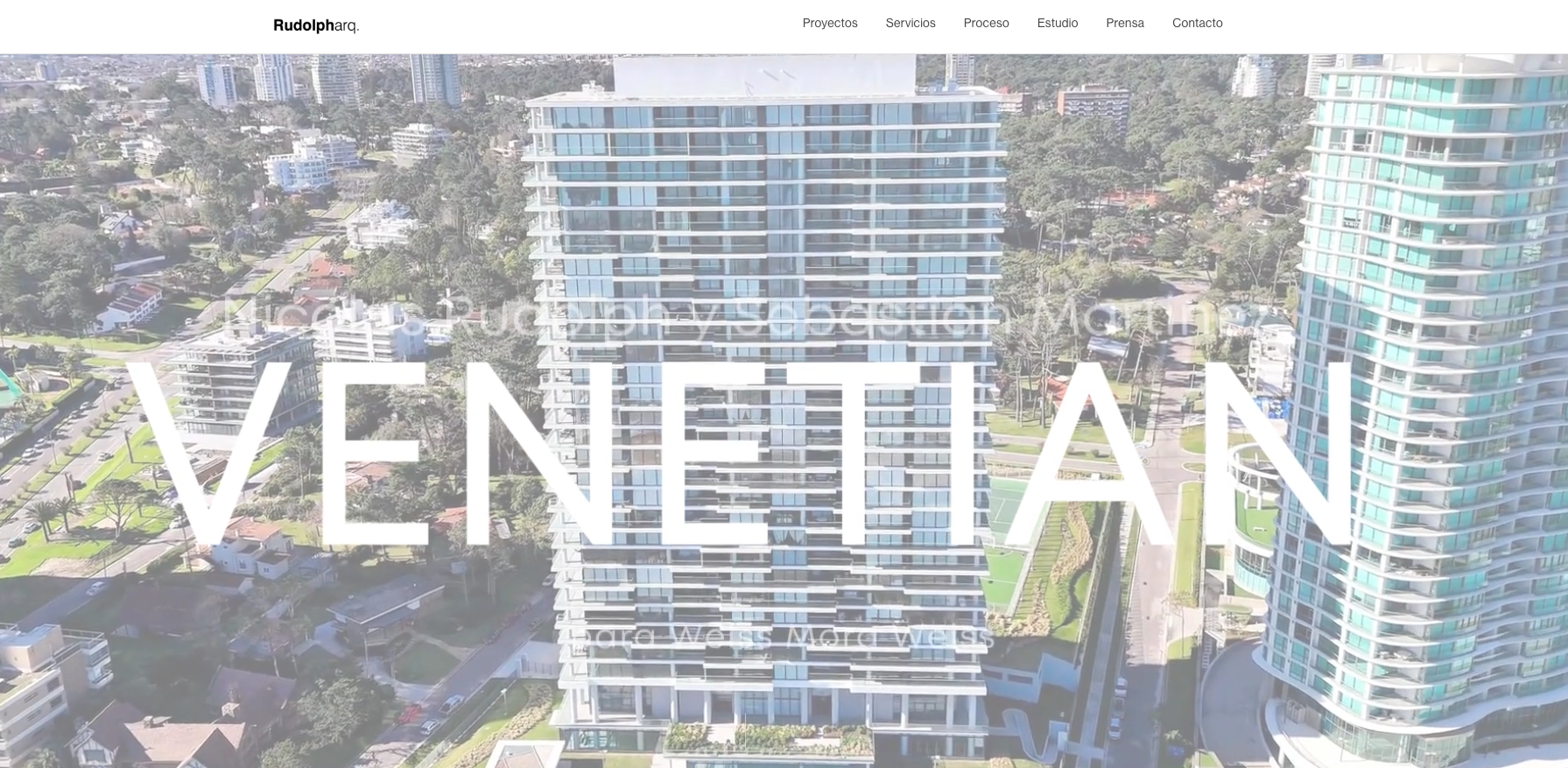
One brand. Three buyers. Zero infrastructure.
The initial research phase focused on understanding who each division serves and how they find clients. What became clear immediately: Rudolph didn't need one website. They needed three, each speaking directly to a different buyer with different motivations, budgets, and decision processes. Beyond the websites, the operational gap was significant across three areas.
No Lead Tracking System
Leads came through referrals, word of mouth, and sporadic online inquiries with no system to capture, track, or follow up. There was no way to know where a lead originated, how many were active, or which ones had gone cold. Referrals, the primary growth engine for architecture firms, were being managed in someone's memory.
No Client Communication System
Active projects had no centralized place for clients to stay updated between meetings. Clients couldn't log in to see progress photos, review milestones, or access documents. The only update mechanism was an email or a call, which means the quality of communication depended entirely on whoever remembered to send one.
No Single Source of Truth
Nicolas had no unified view of his firm's activity. Active projects, lead tracking, client communications, and marketing performance were all in different places, or nowhere. The gap between "knowing your business is growing" and "seeing it in real time" was entirely closed by individual memory and intuition.
The diagnosis pointed to a build that's relatively compact in scope but high in operational impact: three websites, one client portal, one admin dashboard, automated communications, and a CRM, all connected as a single system.
For the broader pattern in this vertical, see the professional services industry page.
Research, ICPs, and Positioning
The first step wasn't designing websites. It was understanding who each division actually sells to. We defined 2-3 ideal client profiles per service line, the homeowner looking for a residential architect thinks differently than a corporate facilities manager evaluating office redesigns, who thinks differently than an investor evaluating property ROI. Competitor and keyword research followed, and a positioning summary for each division. The output: three distinct content strategies, one for each buyer, before a single page was designed.
Three Websites, Client Portal, Admin Dashboard, Automations
Three conversion-optimized websites built simultaneously, each with its own messaging, structure, and buyer focus. Each follows a proven architecture: Hero → Problem/Solution → Portfolio → Case Studies → Process → Testimonials → FAQ → Contact. SEO foundation built in from day one: schema markup, meta tags, structured content. The client portal gives every active client a login where they see their project milestones, a photo gallery, AI-generated weekly progress summaries, and a central repository for renders, plans, and documents. The admin dashboard. Nicolas's single control center, covers project oversight, lead and CRM tracking, client management, document storage, and analytics. Automated communications handle the operational layer: client confirmations when milestones are reached, internal team notifications for new leads and deadlines.
Websites launched
0 (scattered)
→3 live sites
Client portal
None
→Full portal
Lead tracking
Email & memory
→CRM dashboard
Time to launch
N/A
→4 weeks
- ▸Three service divisions. Residential, Office, Revalue, each now has a dedicated website speaking directly to that buyer. Before, they shared nothing. Now they compete independently.
- ▸Clients can log in, see their project status, view progress photos, and read an AI-generated weekly summary. That communication gap, the standard architecture client experience, is closed.
- ▸Nicolas has a single view of the firm: active projects, lead pipeline, client history, and marketing performance. It replaced scattered emails, phone notes, and collective memory.
- ▸The system is designed to scale. More projects, more clients, more content, more analytics, the infrastructure handles it without a rebuild.
- ▸For an architecture firm that grows on referrals, the portal is the highest-impact component. A client who feels informed throughout a 12-month project recommends you. A client who had to chase updates does not.
Questions About This Case Study
4 weeks total. Phase 0 (research, ICPs, positioning) took 2 weeks. Phase 1 (three websites, client portal, admin dashboard, automations) took 2 weeks. The system was live and functional at the end of the month.
The full Phase 0-1 build took 4 weeks total: Phase 0 (2 weeks) for ICP definition, competitor research, and positioning strategy; Phase 1 (2 weeks) for three conversion-optimized websites, client portal with project tracking and photo galleries, admin dashboard for lead and project management, and automated communication workflows. Monthly maintenance covers hosting, analytics tracking, content updates, and system optimization. Pricing depends on the number of service divisions and complexity, the AI Ops Audit scopes exactly what you need.
Yes. The structure works for any firm that serves multiple client types (residential, commercial, institutional) and needs separate online presence for each. The client portal is especially relevant for architecture, your clients are making significant investments and want visibility into what's happening with their project. The scope scales based on how many divisions you have and how complex your project management needs are.
The proposal outlines Phases 2-3 as optional expansions: an AI-powered content engine (automated blog posts, project case studies, schema markup for search visibility), paid advertising integration (Google Ads, Meta Ads with tracking through the dashboard), and add-ons like smart lead enrichment, social content automation, and an instant proposal creator using stored client and project data. These build on top of the Phase 0-1 foundation.
No. The admin dashboard is designed for non-technical users. Notion is the workspace, it's intuitive and requires no coding. Photo uploads, project updates, and client management are all point-and-click. Work-Smart handles the hosting, technical maintenance, and analytics entirely.
Word-of-mouth works for clients who already know you. The website reaches the ones who need you but haven't heard of you. For high-end residential architecture, the buying cycle is 1-2 years. Prospects research extensively before reaching out. A portfolio that shows the human commitment behind each project, the process, the team, the year-long build, builds trust before the first conversation happens.
If your architecture firm is running on email, phone calls, and memory, with no unified view of your projects, leads, or client communications, you're in the same position Rudolph was.
A complete digital infrastructure for an architecture firm doesn't need to take six months. The AI Ops Audit scopes exactly what you need and what it would cost.